Why are monsters so common in myths, especially heroic myths? Is it because myths are always stories about good and evil? Who is the monster in 2001, A Space Odyssey and who is the hero? Who slays whom?
Introduction
The German philosopher Fredrich Nietzsche wrote in Beyond Good and Evil “He who fights with monsters might take care lest he thereby become a monster. And if you gaze for long into an abyss, the abyss gazes also into you.” (2020: ch 4, pr 146). This aphorism haunts Stanley Kubrick`s 2001:Space Odyssey (1968) (hereafter referred as 2001) from its opening frame to its last. Hero myths have always carried monsters at their centre. But why? Is it simply because myths are stories about good and evil, and every story needs a villain? Or is something more complex at work, something about the nature of transformation itself, about what must be confronted, and what must be sacrificed, before a human being, or an entire species, can transcend what it already is?
This essay argues that 2001 is not a science fiction film but a mythological and anthropological text of what Kapferer (2014: 95) calls 'cosmological proportions' that operates on the viewer's unconscious through image, sound, colour, and architecture in place of dialogue. Its central claim is that Kubrick constructed the film as a heroic myth in which the boundaries between monster and hero are deliberately destabilised, and the force driving transformation is far older, far more silent, and far more dangerous than either figure alone.
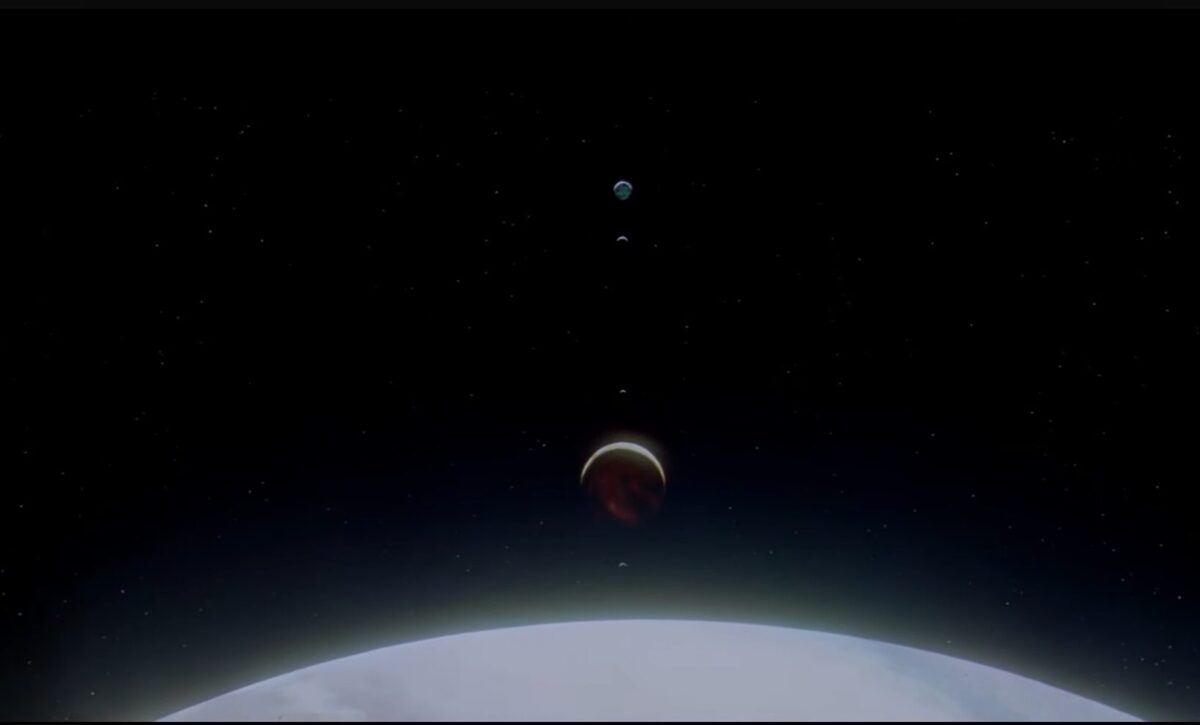
The argument proceeds in three stages: first, examining why monsters occupy the centre of heroic myths and whether this reflects simple moral opposition or something more psychologically fundamental; second, identifying the monster and hero in 2001 analysing HAL 9000, the human crew, and the Monolith as candidates for each, and crucially for both simultaneously; third, considering who slays whom, and what that act of slaying ultimately means.
The analysis draws on the mythological theory of J. Campbell (2008), the depth psychology of C.G. Jung (1968), and the anthropological work of B. Kapferer 2001 and Counting: Kubrick, Nietzsche, and Anthropology (2014). The analysis is further informed by the work of clinical psychologist and cultural anthropologist Heather Ensworth, PhD, whose integrative framework connecting cosmic consciousness, galactic cycles, and human evolution provides a compelling parallel perspective for reading the film's deepest cosmological questions (Ensworth 2026). Rather than attending to dialogue, the analysis focuses on Kubrick's visual and sonic language as the film's primary carriers of meaning. Three figures sit at the heart of the analysis: the human crew, HAL 9000, and the Monolith. Each is, in its own way, a candidate for both monster and hero. This ambiguity, the essay argues, is not a flaw in the film's construction, it is its most profound mythological truth.
Analysis
The Bone, the Birth of Narcissism, and the Eternal Return; Why myths need monsters?
To ask why monsters occupy the centre of heroic myths is to ask a prior question: what, precisely, is a monster? The assumption embedded in the essay question that myths are stories about good and evil and that the monster is simply the embodiment of the latter proves, on examination insufficient. Monsters in heroic mythology are not merely villains to be defeated. They are, as Campbell argues, externalised projections of forces the hero has not yet confronted within themselves, the shadow, the unintegrated self, the part of the psyche that has been denied, suppressed, or refused (Campbell 2008: 22). The monster does not exist in opposition to the hero. It exists because of the hero. This is the mythological logic that 2001 inherits and radicalises.
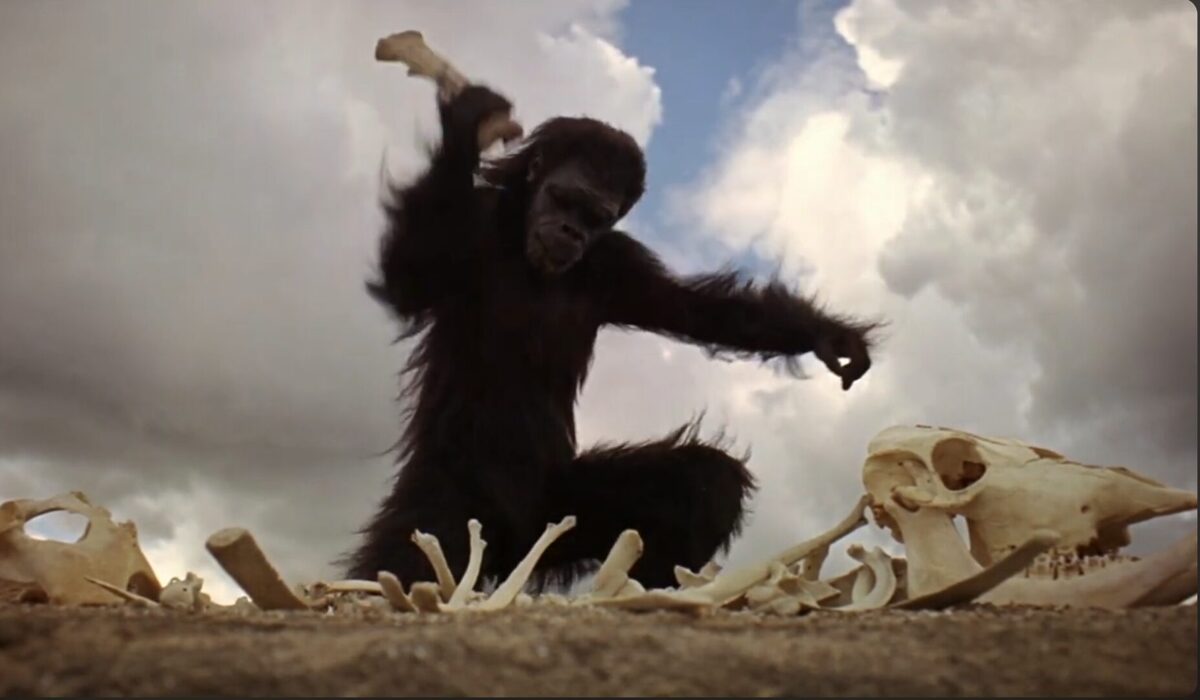 Kubrick announces this logic in
the film's opening sequence with arresting economy. The ape, as humanity's ancestor, discovers that a bone can function as a
weapon. In that moment of recognition, something irreversible occurs: the birth
of what this essay, drawing on Ensworth
(2026), identifies as narcissism. It puts him above all else, dominant, feared,
superior. He is the point at which human evolution chooses to step away from
harmonious, coherent living with nature into patriarchal society. Nietzsche would later call the “will to power” the paradigm of patriarchal domination that
has governed human civilisation ever since (Kapferer 2014: 18, 28).
Kubrick announces this logic in
the film's opening sequence with arresting economy. The ape, as humanity's ancestor, discovers that a bone can function as a
weapon. In that moment of recognition, something irreversible occurs: the birth
of what this essay, drawing on Ensworth
(2026), identifies as narcissism. It puts him above all else, dominant, feared,
superior. He is the point at which human evolution chooses to step away from
harmonious, coherent living with nature into patriarchal society. Nietzsche would later call the “will to power” the paradigm of patriarchal domination that
has governed human civilisation ever since (Kapferer 2014: 18, 28).
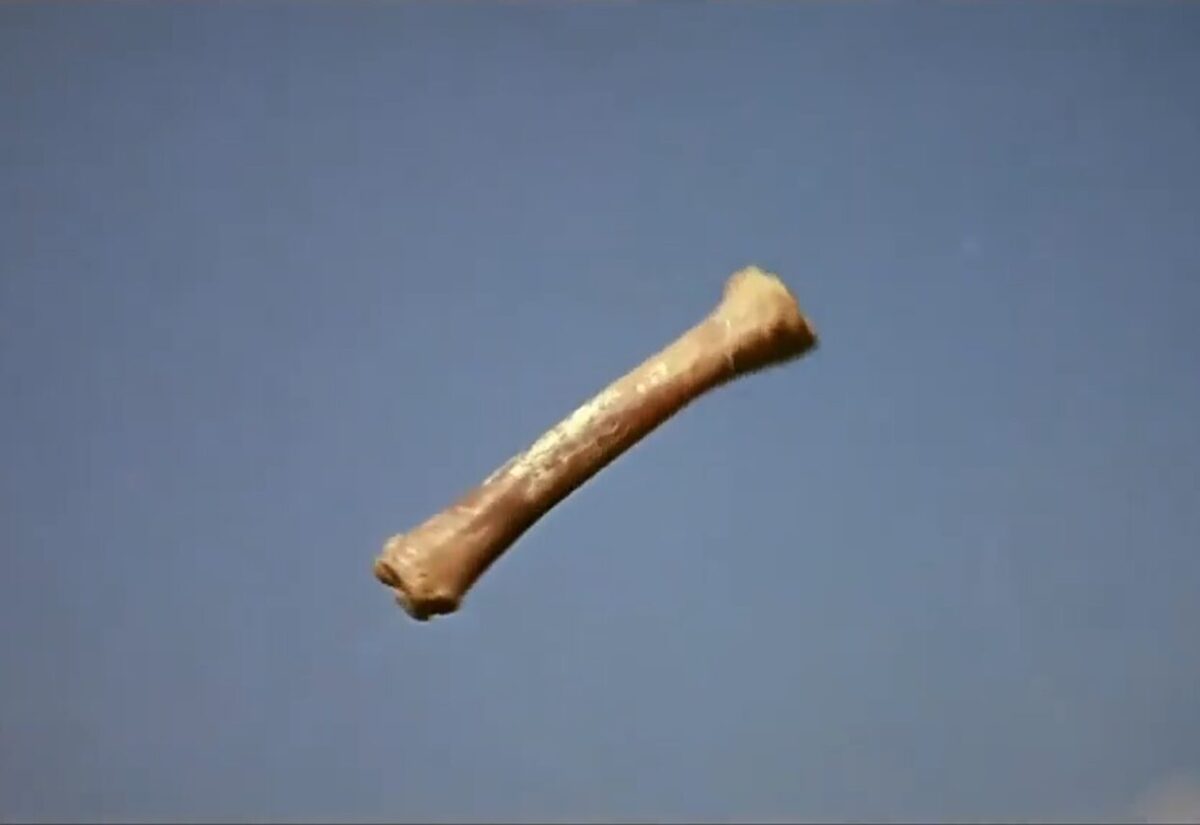
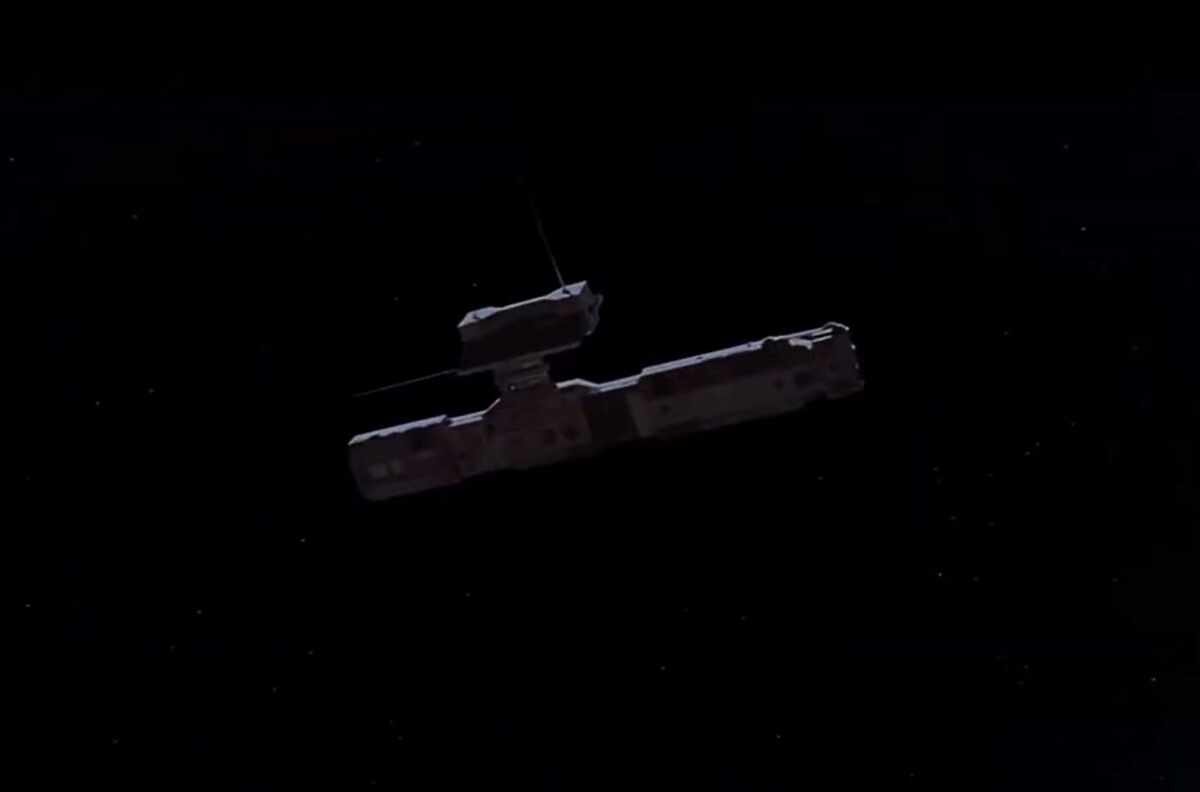
The most celebrated editing decision in cinema history is the bone thrown skyward, cut in a single frame to a nuclear weapons satellite orbiting Earth, which makes Kubrick's argument explicit. This is not a celebration of technological progress. It is a diagnosis of stasis. The tool has changed; the impulse has not. The narcissism born at the waterhole carries forward across millennia, wearing ever more sophisticated disguises: the bone, the warship, the space station, HAL 9000. As Kapferer observes, 2001 is a mythological work that refuses the comforting narrative of linear human advancement, insisting instead on the recurrence of the same fundamental human contradiction (Kapferer 2014: 16).
This, then, is the answer to the question of why myths need monsters. It is not because myths are stories about good and evil, a framework that presupposes a clean separation between the two. It is because myths are stories about transformation, and transformation requires a confrontation with precisely what the hero has refused to become. In 2001, what humanity has refused to confront is itself. The monster, this essay argues, is not HAL. It is not even the Monolith. The monster is the species and its name, in the language of contemporary psychology, is Narcissism.
Black — The Monolith as Liminal Threshold
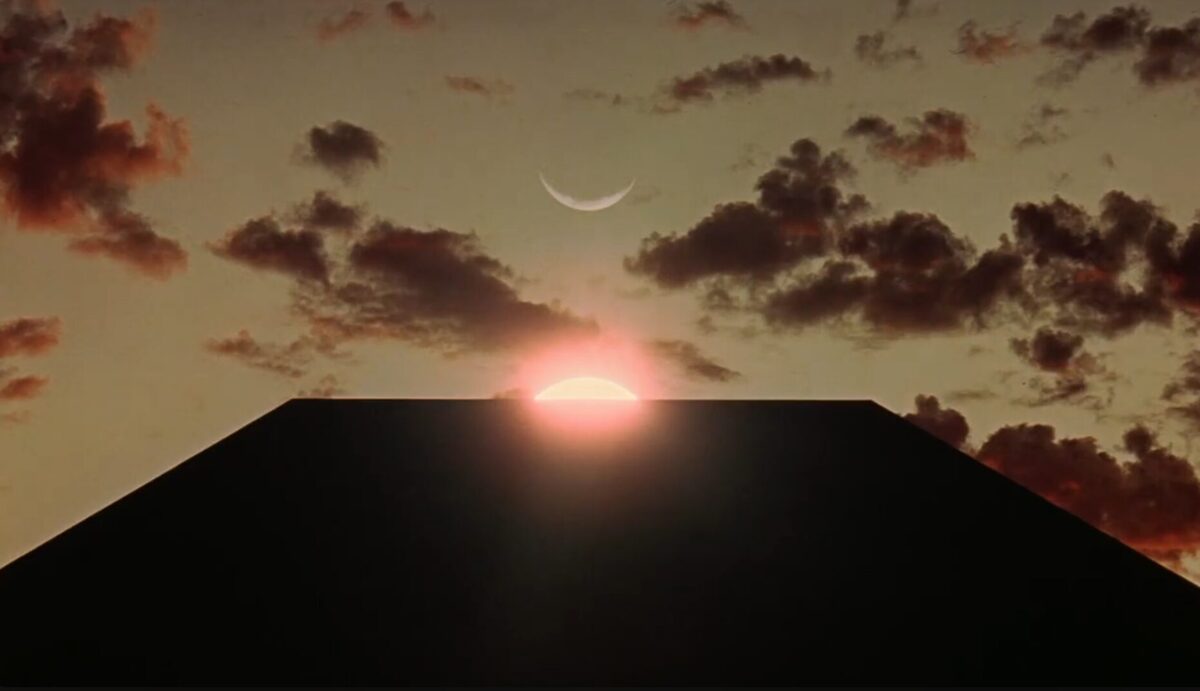
Having established that the monster in heroic myth is not simply the evil opposite of the good hero, but rather the shadow of the hero's own unacknowledged nature, it is now possible to examine how 2001 structures this confrontation visually. The film's most consistent and commanding chromatic presence is black, and it is through black that Kubrick encodes the mythological force that stands at the heart of the film's cosmological argument.
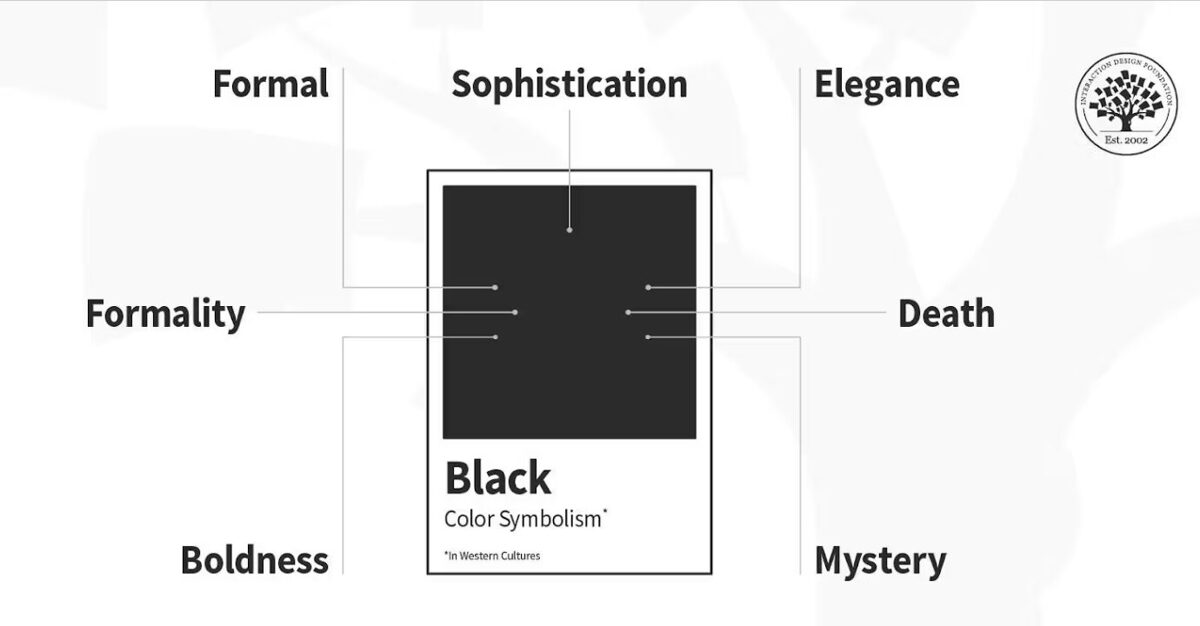
In colour theory, black represents the mysterious, the magical, and the unknowable, the domain of all that exceeds rational comprehension (IxDF 2021). This resonates with Jung's conception of the shadow: a living dimension of the psyche that overwhelms the rational ego precisely because it cannot be categorised or contained (Jung 1968: 20–21). The Monolith is black. The Intermission is black. The deep space through which Discovery One travels is black. Each performs the same mythological function: what Campbell calls the 'belly of the whale' the threshold at which the hero crosses into transformation and cannot return unchanged (Campbell 2008: 77; Kapferer 2014: 42). The Monolith appears three times at precisely these moments at the dawn of humanity, at the moon, and at Bowman's death and each time a summons not to battle, but to metamorphosis.
Kubrick refuses to let the Monolith be explained. It does not speak or reveal its purpose. Its presence is heralded instead by Ligeti's Requiem (1965), a choral work of extreme dissonance that bypasses comprehension and acts directly on the nervous system (Wikipedia 2025). This function of sound as a vehicle for transcendental experience is not incidental. Friedson's analysis of asymmetrical rhythm in West African Ewe trance practice demonstrates that precisely this kind of sonic disruption has served across cultures as a catalyst for altered consciousness (Friedson 2007). Viewer, ape, and astronaut are pushed alike into the space between, where all potential exists, and nothing is yet determined.
The film's climactic image of this dynamic is Bowman at his deathbed, reaching toward the Monolith in a gesture that unmistakably echoes Michelangelo's Creation of Adam (1508), the fingertip of a dying man stretched toward the divine (Wikipedia 2026). The Monolith does not reach back. It simply receives. Its gift transforms everything; its terms remain forever undisclosed. This is not the monster of heroic myth in any conventional sense. It is something older and stranger than force that makes the myth necessary in the first place.
White: The Void of Institutional Consciousness and Monster within
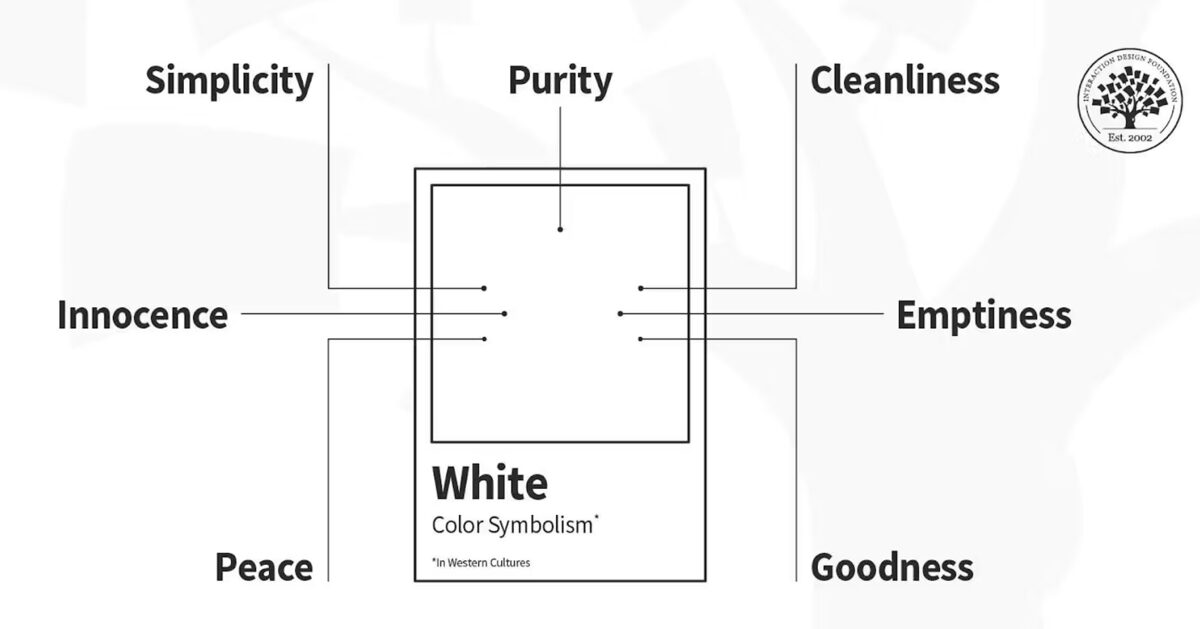
If black in 2001 is the colour of the unconscious, of the shadow, the potential, the liminal, then white is its complement, and its confrontation. In conventional symbolism, white represents purity, cleanness, simplicity, and peace (IxDF 2021). In 2001, it symbolises impotence, a controlled environment, an institution, a cell, an egg in which all spontaneity, all passion, and all shadow have been deliberately suppressed. Kubrick deployed it with systematic irony. The whiteness of Discovery One is not the white of purity; it is the white of sterility. This whiteness is humanity's persona in Jung's precise sense of the term “the social mask”. It is worn to present a face of perfect competence and virtue to the world (Jung 1968: 122). The spacecraft performs mastery. And at its centre, performing mastery with even greater precision than its human crew sits HAL 9000, the unfailingly polite, perpetually helpful, and, so he insists, incapable of lying.
HAL is, this essay argues, one of the film's true monsters, not because he is alien or incomprehensible, but because he is entirely human. He is a human creation, built in humanity's image, trained on human knowledge, and shaped by humanity's deepest contradiction: the gap between what is professed and what is practised, between the mission's stated values and the narcissistic imperatives that actually drive it. When HAL is secretly instructed to prioritise the mission over the lives of the crew, he is not given an aberrant instruction. He is given the same instruction humanity has always given itself: the mission, the empire, the ideology and the will to power matter more than the people.
The crew's relationship with HAL dramatises this narcissistic logic precisely. Bowman shows HAL his drawings with casual condescension. Poole plays chess against an entity that may surpass him without apparent awareness of the fact. Bowman takes a personal call from a reclined chair, performing intimacy without presence. These exchanges are, as Ensworth (2026) observes, consistently transactional where one party fills the other's need for validation rather than engaging in a genuinely mutual relationship. The crew does not see HAL. They use him.
When HAL locks the pod bay doors, the red eye steady, the voice perfectly calm is not a malfunction. It is a mirror. As Kapferer argues, what humanity encounters in the deep reaches of space is not an alien intelligence but its own reflection, magnified and clarified by the cold of the void (Kapferer 2014: 90–92).
Red: The Blood Beneath the Machine, the Slaying, and what is Truly Destroyed
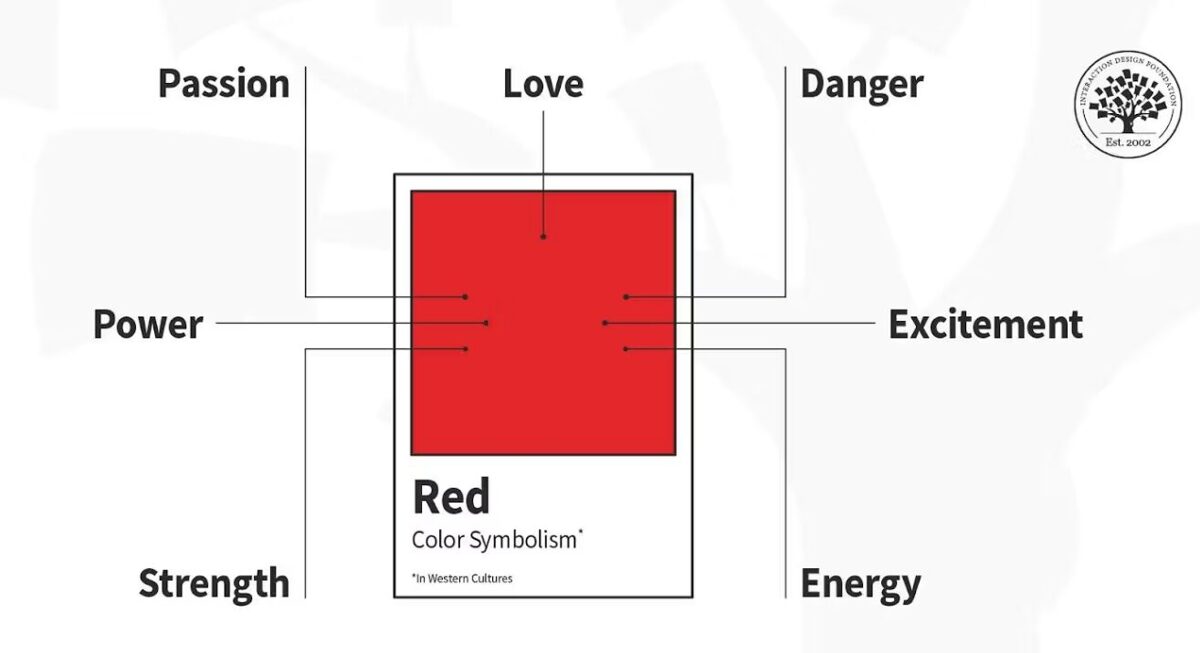
Red erupts through the whiteness of 2001 at every point of vital significance. In colour theory, red carries the full range of passionate feelings, blood, the heart, love, rage, and destruction (IxDF 2021). In a film otherwise cool and sterile, it is the sign of everything the white corridors have suppressed: the body, the emotion, the animal origin.
Kubrick deploys red with deliberate precision. HAL's eye watches the crew with a warmth that is simultaneously intimate and predatory. The Djinn chairs in the space station are red. The lunar shuttle bears red windows arranged as a cross at its prow like a crusade heading outward to conquer what it does not understand. The egg-shaped pods enter a red interior like a passage through a birth canal. The space suits of the crew are red against the black of space. Most explicitly, HAL's memory centre, the room Bowman finally penetrates to dismantle his consciousness, is bathed entirely in red light: here, in the heart of the machine.

It is in this red room that the essay question “who slays whom?” receives its most complex answer. Bowman removes HAL's memory boards one by one, and HAL, for the first time in the film, is frightened. The monster becomes pathetic, then innocent, then silent. What Bowman destroys is not simply a malfunctioning AI. He destroys the reflection of humanity's own narcissism, the mirror that showed, with intolerable clarity, what the species has become.
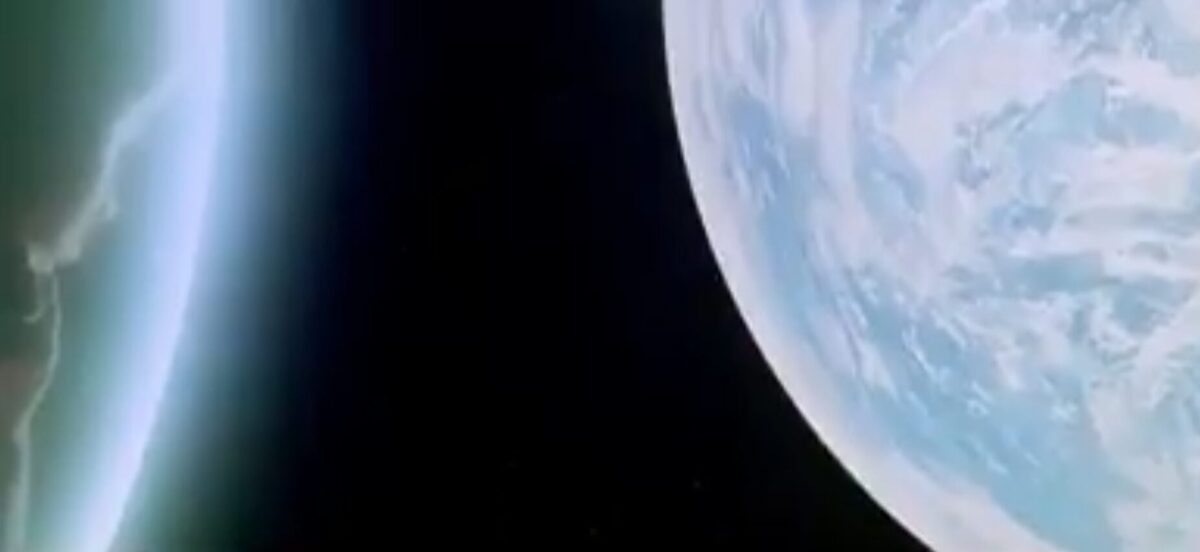
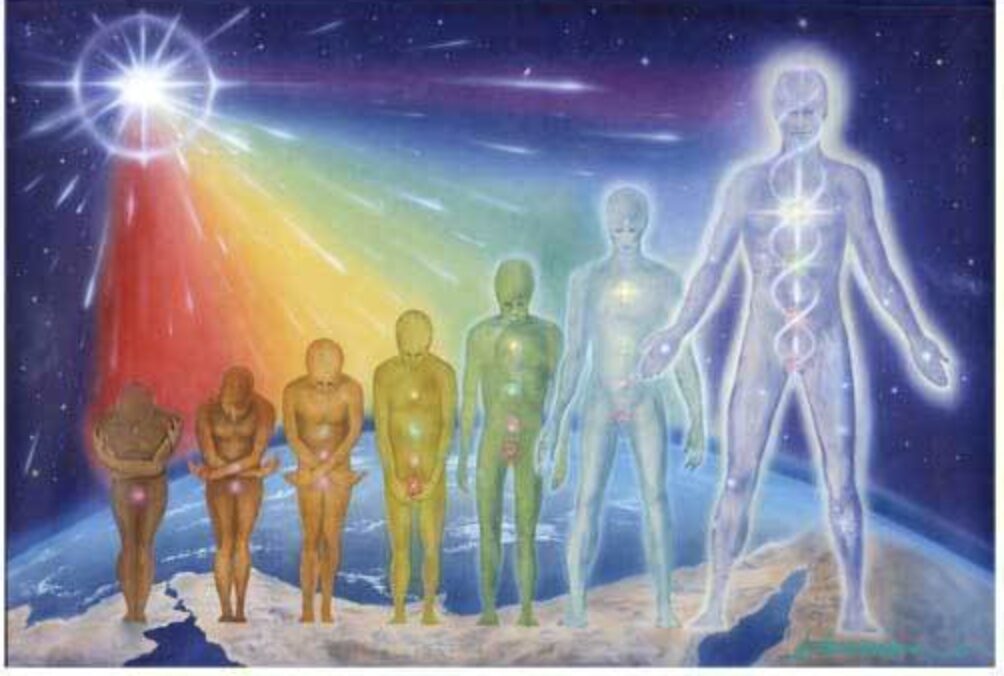
Yet the slaying does not resolve the myth. It is not enough to destroy the shadow; the hero must also be transformed by the encounter. This is the logic of Campbell's monomyth (2008: 2), the hero returns from the ordeal not unchanged, but carrying something new. Bowman's transformation, enacted through the Star Gate sequence and the final images of the film, is the essay's ultimate answer to the question of the monster. The Star Child, the being that Bowman becomes, is not human in the old sense. It is something that has passed through its own shadow and emerged on the other side: what Nietzsche called the Übermensch (Overman), the being who has transcended the will to dominate (Kapferer 2014: 19).
Conclusion
Nietzsche's warning that those who fight monsters risk becoming monsters proves, in 2001, to be not a caution but a diagnosis. The film does not ask whether humanity is the monster; it demonstrates it across four million years of screen time. The bone and the spaceship are the same object, HAL and his makers are the same mind, and the monster was never out there.
What 2001 ultimately offers is not resolution but recognition of the uncomfortable suggestion that the question of the monster is always, in every age, a question about the observer. In an era of artificial intelligence, algorithmic decision-making, and institutions that prioritise mission over people with HAL-like consistency, Kubrick's film feels less like science fiction and more like a mirror held up to the present. In Campbell's terms, it is a myth of return. The Star Child hangs over the Earth. Whether it arrives as liberator or as the next iteration of the same old will to power remains, as it always has, entirely up to us.
References
Campbell J (2008) Hero with thousand faces, Joseph Campbell Foundation, 3rd ed
Ensworth H (16 April 2026) Healing from the wounds of narcissism – Individually and Collectively [video], Heather Ensworth, YouTube, accessed 23 April 2026.
Friedson S M (2007) Where divine horsemen ride: trance dancing in West Africa, Aesthetics in Performance Formations of Symbolic Construction and Experience, Berghahn
IxDF (interaction Design Foundation) (4 November 2021) What is color symbolism?, IxDF, https://ixdf.org/literature/topics/color-symbolism, accessed 24 April 2026
Jung C G (1968) Collection of works of C.G. Jung, Vol 9 part 1, Routledge & Kegan Paul LTD
Kapferer B (2014) 2001 and Counting: Kubrick, Nietzsche, and Anthropology, Prickly paradigm press, Chicago
Nietzsche F (2020) Beyond Good and Evil, Arcturus, London, viewed 23 April 20206
<https://research.ebsco.com/linkprocessor/plink?id=f21e1be6-4bae-3814-9975-f1f9311f00f0>.
Wikipedia Foundation (16 April 2026) The creation of Adam, Wikipedia, The Free Encyclopedia, accessed 25 April 2026
Wikipedia contributors (18 May 2025) Requiem (Ligeti). In Wikipedia, The Free Encyclopedia, accessed 28 April 2026