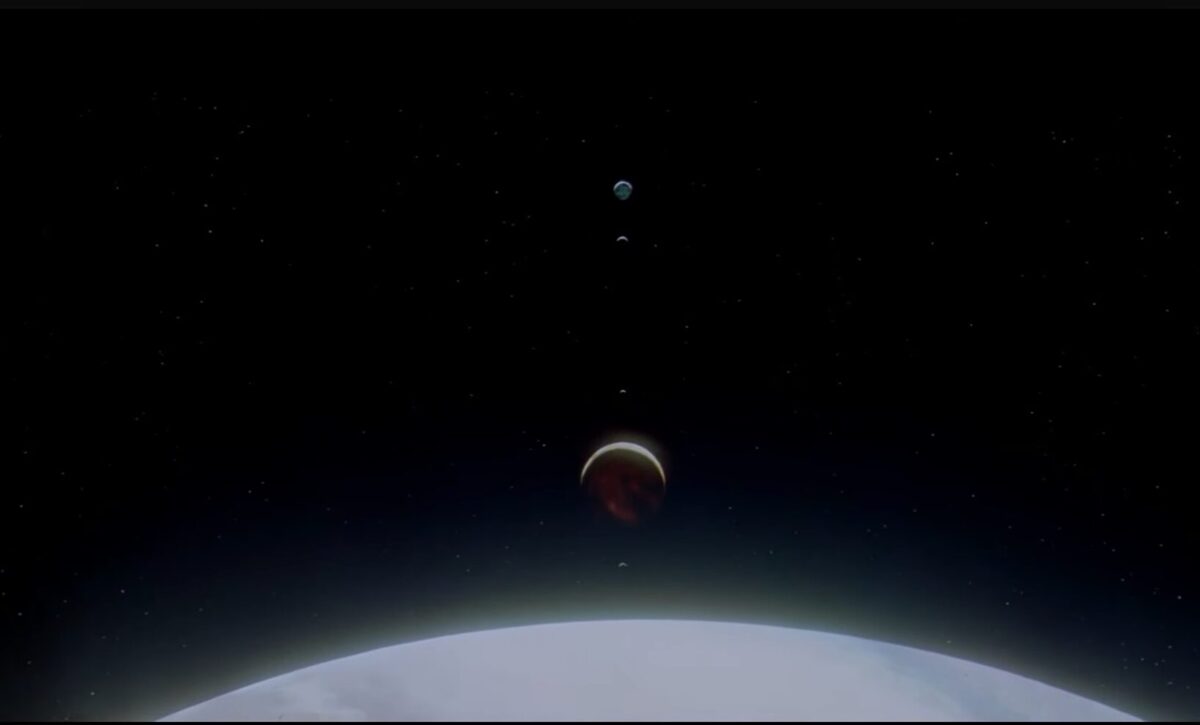
Why are monsters so common in myths, especially heroic myths? Is it because myths are always stories about good and evil? Who is the monster in 2001, A Space Odyssey and who is the hero? Who slays whom?
Introduction
The German philosopher Fredrich Nietzsche wrote in Beyond Good and Evil “He who fights with monsters might take care lest he thereby become a monster. And if you gaze for long into an abyss, the abyss gazes also into you.” (2020: ch 4, pr 146). This aphorism haunts Stanley Kubrick`s 2001:Space Odyssey (1968) (hereafter referred as 2001) from its opening frame to its last. Hero myths have always carried monsters at their centre. But why? Is it simply because myths are stories about good and evil, and every story needs a villain? Or is something more complex at work, something about the nature of transformation itself, about what must be confronted, and what must be sacrificed, before a human being, or an entire species, can transcend what it already is?
This essay argues that 2001 is not a science fiction film but a mythological and anthropological text of what Kapferer (2014: 95) calls 'cosmological proportions' that operates on the viewer's unconscious through image, sound, colour, and architecture in place of dialogue. Its central claim is that Kubrick constructed the film as a heroic myth in which the boundaries between monster and hero are deliberately destabilised, and the force driving transformation is far older, far more silent, and far more dangerous than either figure alone.